

Breast Cancer Awareness Month 2026
Strengthening Best Practice in Breast Imaging Across Australia & New Zealand
Breast Cancer Awareness Month is a powerful reminder of the importance of early detection — and the critical role breast imaging plays in identifying cancers when treatment is most effective. Breast cancer remains the most commonly diagnosed cancer among women in both Australia and New Zealand, with early detection significantly improving survival and long‑term outcomes.
The Power of Early Detection
Population‑based breast screening programmes are central to early detection. In Australia, BreastScreen invites women aged 50–74 for free mammograms every two years, while in New Zealand, BreastScreen Aotearoa provides screening for women aged 45–69. These programmes aim to detect cancers before symptoms appear, using high‑quality mammography to identify subtle changes in breast tissue.
Best Practice in Breast Imaging
Breast imaging across Australia and New Zealand follows evidence‑based standards set by professional bodies such as RANZCR (Royal Australian and New Zealand College of Radiologists). Best practice includes:
Triple assessment — clinical examination, imaging, and biopsy when required
Age‑appropriate imaging pathways — ultrasound first for younger women; mammography first for women over 40
High‑quality digital mammography meeting BreastScreen technical standards
Advanced modalities including digital breast tomosynthesis (DBT), contrast‑enhanced mammography (CEM), and breast MRI for complex or high‑risk cases
Structured reporting systems aligned with RANZCR guidance for consistent interpretation
These standards ensure imaging is accurate, reliable, and capable of detecting early cancers that may otherwise go unnoticed.
Symptomatic Breast Imaging: When Concerns Arise
Not all breast imaging occurs through screening programmes. When symptoms such as lumps, skin changes, or nipple discharge appear, diagnostic imaging becomes part of a structured clinical pathway. Best practice includes:
Targeted ultrasound for specific areas of concern
Diagnostic mammography for women over 40 or when clinically indicated
Image‑guided biopsy when abnormalities require tissue diagnosis
This approach ensures timely, accurate diagnosis and supports rapid access to treatment.
Staying Breast Aware
Breast Cancer Awareness Month encourages women to stay familiar with their normal breast appearance and feel. Any persistent changes — lumps, thickening, dimpling, nipple changes, or unusual pain — should be checked promptly by a GP or healthcare provider.
A Shared Responsibility
Breast imaging professionals, screening programmes, and individuals all contribute to early detection. By following best practice, investing in high‑quality imaging, and encouraging regular screening attendance, Australia and New Zealand continue to improve outcomes for people affected by breast cancer.
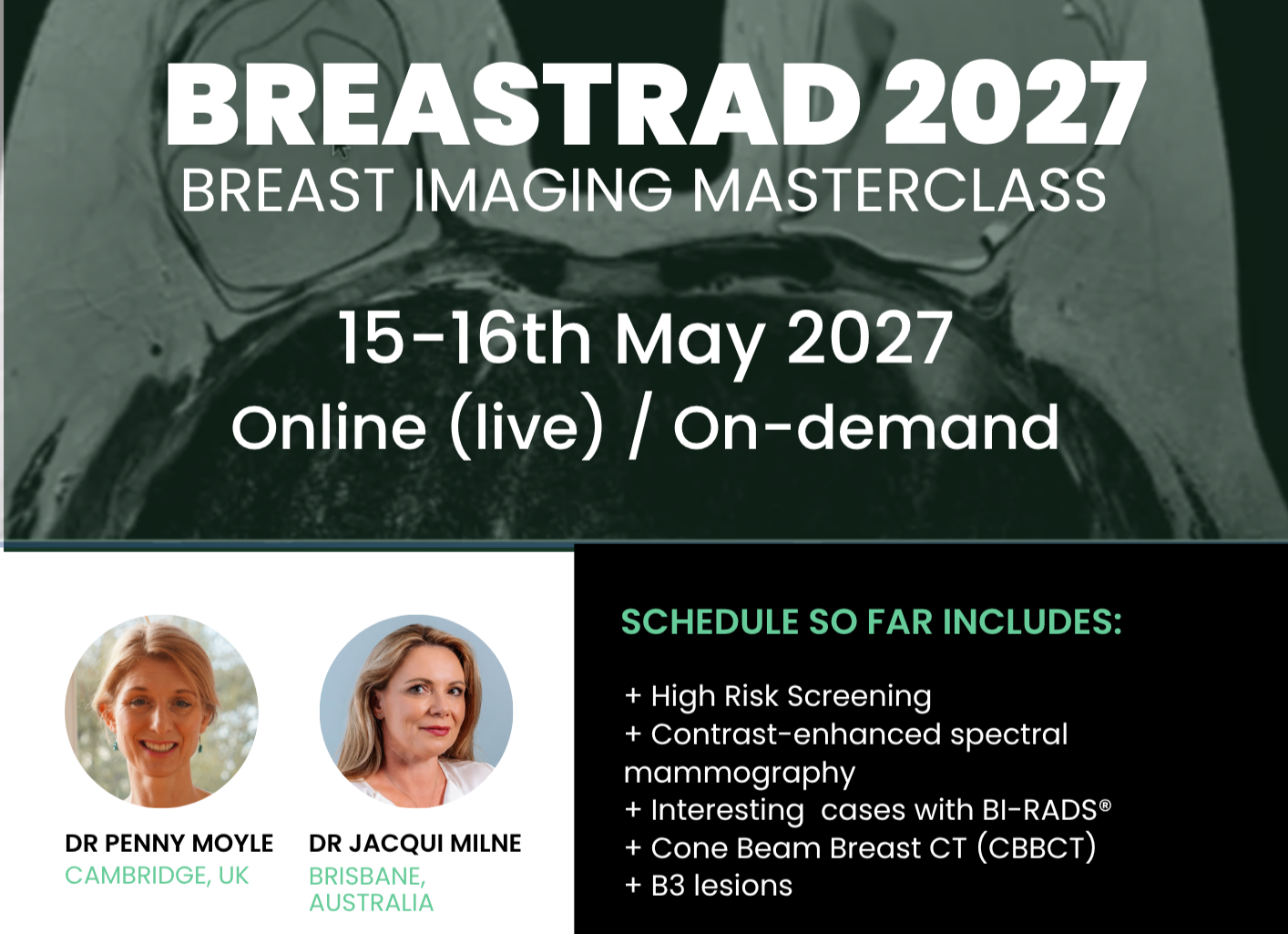
🧠 CME for Radiologists and Radiographers - Introducing BREASTRAD 2027
Our next live breast imaging masterclass will take place in May 2027
BREASTRAD Online Imaging Masterclass (15-16 May 2027)
Led by an experienced international faculty, BREASTRAD 2027 delivers a focused, practical update in breast imaging best practice. This two‑day online course combines expert teaching with real case review, giving Radiologists and Breast Clinicians the skills and confidence to interpret modern breast imaging with accuracy and consistency.
What BREASTRAD Covers
Best‑practice mammography interpretation
Ultrasound assessment, lesion characterisation & common diagnostic pitfalls
BI‑RADS and BSBR reporting frameworks
Breast MRI fundamentals and case‑based learning
Cone‑Beam Breast CT (CBBCT) introduction and clinical applications
High‑risk screening pathways and multidisciplinary perspectives
Whether you’re a Radiologist refining your breast imaging reporting or a clinician seeking deeper insight into imaging‑guided decision‑making, BREASTRAD 2027 offers practical, clinically relevant education designed to strengthen breast cancer detection and diagnostic quality across Australia, New Zealand, and beyond.
💬 Join Us 15-16 May 2027 OR watch 2026 on-demand
If you can’t wait until next year, you can watch our 2026 Breast Imaging Masterclass online and on-demand and gain 9 CME points.
📣 Useful Resources
Here are some trusted, official sources to help clinicians, patients, and families learn more:
Australia
BreastScreen Australia
https://www.health.gov.au/our-work/breastscreen-australia
Australia’s national breast screening program offering free mammograms for eligible women.
Cancer Council Australia – Breast Cancer
https://www.cancer.org.au/cancer-information/types-of-cancer/breast-cancer
Comprehensive information on breast cancer symptoms, diagnosis, treatment, and support.
National Breast Cancer Foundation (NBCF)
Research, awareness campaigns, and resources supporting early detection and improved outcomes.
Australian Government – Breast Cancer Information
https://www.health.gov.au/health-topics/breast-cancer
Official guidance on breast cancer, screening, risk factors, and national initiatives.
New Zealand
BreastScreen Aotearoa
https://www.timetoscreen.nz/breast-screening/
New Zealand’s national breast screening program for women aged 45–69.
Ministry of Health NZ – Breast Cancer Guidance
Clinical and patient‑focused information on breast cancer pathways and management.
Cancer Society NZ – Breast Cancer Support
https://www.cancer.org.nz/cancer/types-of-cancer/breast-cancer/
Support services, education, and practical resources for people affected by breast cancer.
Breast Cancer Foundation NZ
https://breastcancerfoundation.org.nz
Awareness, advocacy, and evidence‑based information on early detection and treatment.